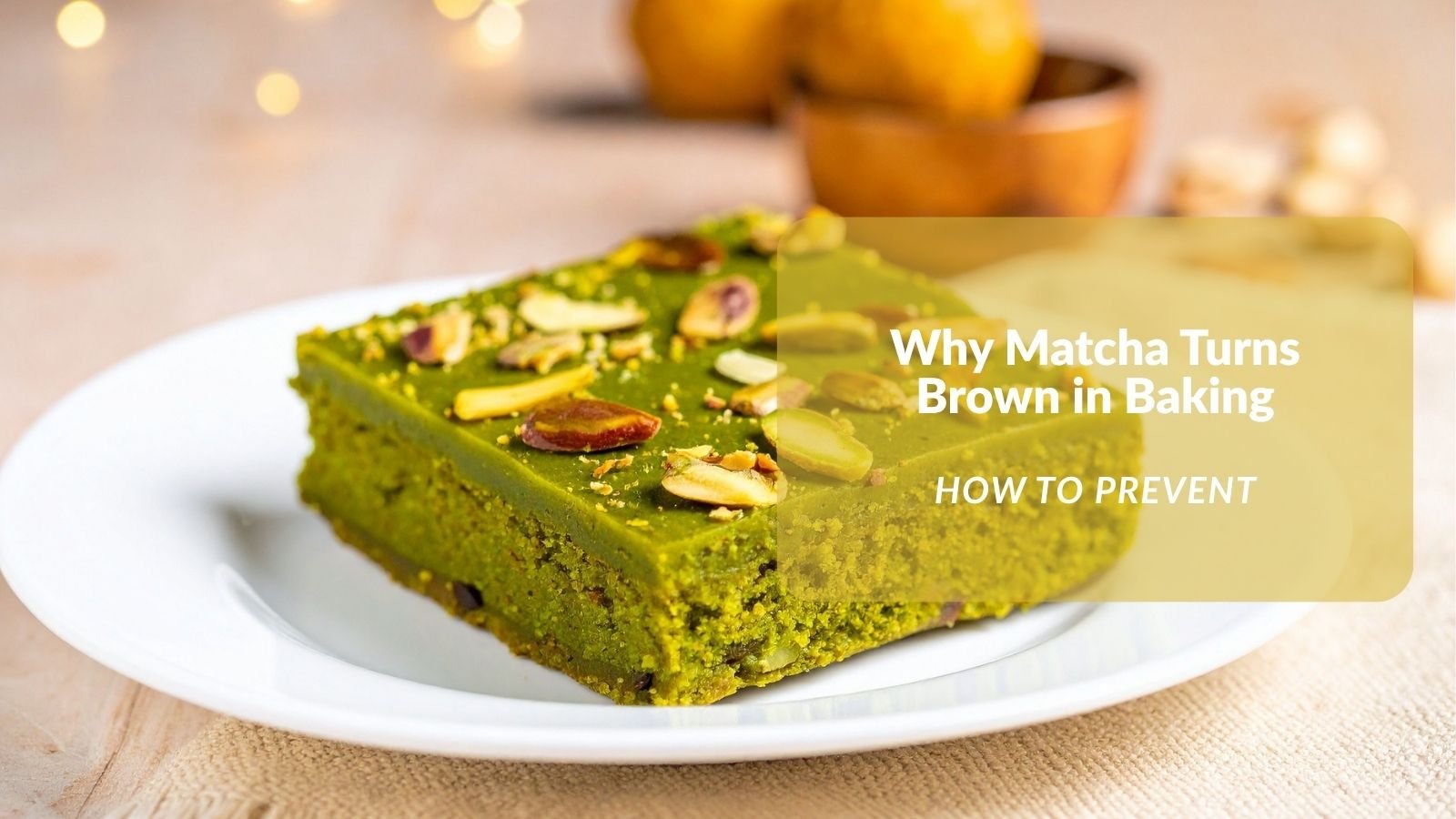
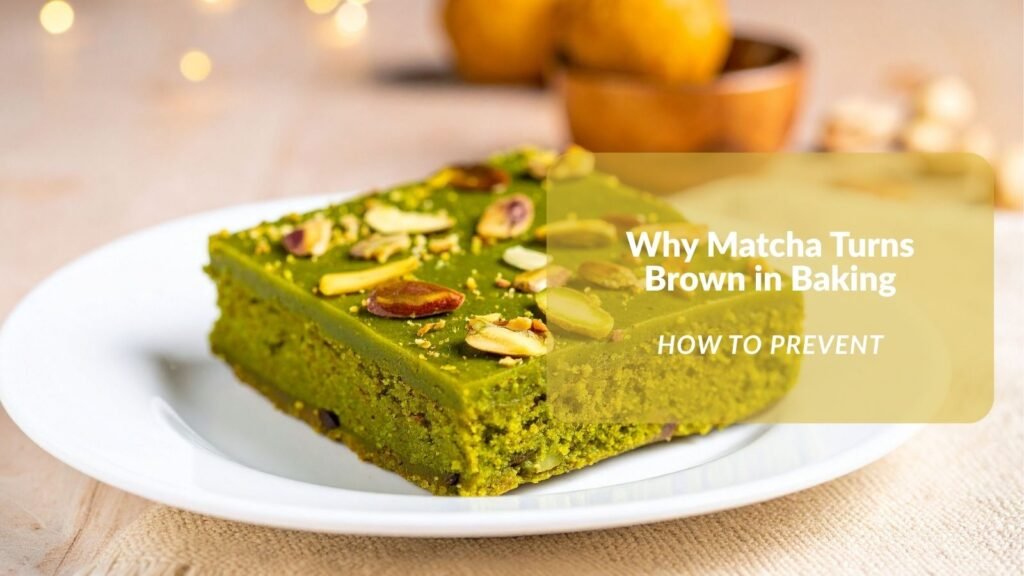
Why matcha turns brown in baking comes down to two separate processes: heat and acidic ingredients slowly break down chlorophyll, the pigment behind most of the leaf's green, while the surface of the cake browns the same way any cake does. Some browning is normal, most of it can be managed, and a green crumb under a brown crust is usually a normal result.
We grow and mill matcha on Mount Mengding, and color is the question bakers ask us most. This guide covers what happens in the oven, which browns are normal, and what actually helps.

Why Does Matcha Turn Brown When Baked?
Two different processes happen to a matcha cake in the oven. Once you can tell them apart, almost everything about your finished cake makes sense.
Inside the cake: green loss. The green of matcha comes largely from chlorophyll, and matcha is ground tea leaf, so the powder is full of it. Chlorophyll is stable on the living plant but fragile in a hot oven: heat breaks it down, and acidic ingredients like lemon juice or yogurt accelerate the change. What is left behind is a dull olive-brown pigment, pheophytin. This heat- and acid-driven color change is well documented in research on matcha in food processing.
You have seen this with broccoli: bright green goes dull army-green when it boils too long. Same pigment, same chemistry. And just as you cannot un-cook broccoli, you cannot put the green back into a baked cake.
On the surface: browning. The crust browns through the same heat-driven reactions that brown other baked goods, especially the Maillard reaction between amino compounds and reducing sugars. The surface heats first and dries first, so it browns the most, and this happens to every cake, matcha or not.
| Green loss (inside the cake) | Surface browning (the crust) | |
|---|---|---|
| Where it happens | Throughout the crumb | The surface and edges |
| What makes it worse | Heat, time, acidic ingredients | Heat, time, alkalinity, a dry surface |
| What you see | Green fading to olive, then khaki | Golden brown to deep brown crust |
| Can you undo it? | No | No, but you can trim or shield the crust |
Why online advice disagrees about baking soda
Acidic and alkaline conditions affect the two processes in opposite directions. A more acidic batter loses its green faster: acid converts chlorophyll into olive-brown pheophytin more quickly. A less acidic batter holds its green better, but a higher pH encourages Maillard browning, so the crust colors faster and darker, an effect long established in food-chemistry research.
That is why one guide says baking soda ruins matcha color and another says it protects it: soda-heavy recipes brown more at the surface, while the green inside survives longer.
The practical takeaway: keep the batter close to neutral, avoiding both heavy acid and heavy soda, because leaning far either way costs color somewhere.
Is It Really Matcha Oxidation?
"Oxidation" is often used as a catch-all explanation, but it is not the whole story. In storage, oxidation is real: the powder slowly reacts with the air, light, and warmth around it over weeks, the green fades to a dull yellow-green, and the fresh aroma goes first. In the oven, heat does most of the color damage, through chlorophyll degradation and surface browning; oxygen can also contribute to pigment degradation, but heat dominates.
The distinction matters because baking can only remove color from where the powder started. If the matcha was already dull when you opened the bag, no technique will bring green back. For baking, buy what you can use within weeks, keep it airtight, lightproof, and cool, and keep it away from the oven or a sunny windowsill. Commercial matcha is often sealed in foil with the air swapped out for nitrogen for exactly this reason.

How Green Should a Baked Matcha Cake Actually Be?
The outside is normally browner than the inside: the surface dries first and reaches the highest temperature, so it browns the most, while the moist middle keeps more of its green. A brown crust over a green crumb is not necessarily a failed matcha cake; in many recipes it is simply the normal result of surface browning.
Photos can also set expectations too high. Some commercial products use added coloring, and lighting, editing, and image processing can make green look more intense than it does in person. A cake colored by matcha alone will usually have a browner surface.
The normal color gradient, from mixing to slicing:
- Batter: vivid green
- Center of the crumb: green to olive green
- Toward the pan: progressively darker olive
- Surface and crust: golden brown to brown

What actually counts as a problem:
- The whole crumb is khaki or gray-brown, not just the edges. The heat was too high, the bake too long, or the recipe very acidic.
- The crumb is dull grayish and the aroma is flat. The powder was stale before it was mixed.
- One side or the edges are much darker than the rest. A dark pan, a hot spot, or a low rack.
How to Keep Matcha Green When Baking
Nothing below stops the chemistry, but every point helps. Start with fresh, vivid powder, as the previous section explains, then:
-
Use a culinary matcha made for cooking. Culinary matcha is produced with heat and bold flavors in mind, and it spares your drinking-grade powder for the cup.
-
Bake at the lowest temperature the recipe allows. A moderately lower oven temperature, with the baking time extended as needed, reduces both surface browning and chlorophyll degradation.
-
Stop at done. A cake keeps cooking on leftover heat, so pull it at done and get it out of the hot pan quickly.
-
Watch the leavening. Where the recipe allows it, avoiding excess baking soda can reduce surface browning; baking powder may suit some recipes better because it leavens without pushing the batter as strongly alkaline.
-
Shield the surface. Parchment or a foil tent from the halfway point limits crust browning; a light-colored pan, and baking strips where appropriate, reduce uneven edge heating.
-
Prefer fast, thin, or gentle formats. Thin cookies and shallow layers spend less time under heat than deep loaves, steaming or a water bath can greatly reduce surface browning, and the greenest matcha element is the one that never meets the oven: frostings, glazes, and no-bake fillings.
-
Do not simply add more matcha. Past a sensible dose, extra powder deepens bitterness and muddies the color long before the cake gets greener. Vivid shop slices often get help from added color.
What about color boosters like spirulina?
Some commercial matcha-style baked goods and mixes use added green coloring, such as spirulina-based or other plant-derived colorants, and some home bakers add a pinch too. It is a formulation choice rather than a substitute for matcha quality: added color shifts the shade while the matcha's own green still fades with heat. Spirulina also carries its own earthy, seaweed-like flavor that becomes noticeable at higher doses, so start small and taste as you go.
Should You Use Culinary or Ceremonial Matcha?
Baking and drinking ask different things of the powder. For most baked applications, culinary-oriented matcha is usually the more practical choice, because the subtle qualities associated with premium drinking matcha are less noticeable after baking: the delicate smells cook off, and sugar, butter, and flour bury the fine sweetness you paid for.
But the honest version is not "culinary always better." For color, what matters most is where the powder starts: a fresh, vivid culinary matcha will usually out-bake a stale ceremonial one. And if a ceremonial matcha happens to hold its green better, that does not necessarily mean the grade itself is responsible; freshness, raw material, processing, and formulation all matter. Grade labels are not standardized across sellers, so judge the powder in front of you: color, aroma, and, if offered, harvest and milling dates.
Quick Troubleshooting Guide
Here is what it usually means when your matcha cake turns brown in one pattern or another.
| What you see | Likely cause | What to try |
|---|---|---|
| Brown crust, green crumb | Normal surface browning | The color is fine; trim the crust if you want a cleaner slice |
| The whole crumb is olive or khaki | Too much heat: temperature, time, or both | Lower the oven temperature, extend the time, test earlier |
| Dull grayish crumb, flat aroma | Old matcha, faded in storage | Fresher powder; airtight, dark, cool storage |
| Deep brown crust with a paler olive crumb | Heavy baking soda | Reduce the soda; consider baking powder where the recipe allows |
| Olive crumb mainly in lemon, yogurt, or fruit recipes | Sour ingredients breaking down the green | Cut back on the sour ingredients, or plan for a deeper olive and keep frosting for color |
| Browning concentrated at the edges or one side | Dark pan, hot spots, or rack position | Light-colored pan, baking strips, rotate midway, center rack |
| Vivid batter but a muddy, bitter cake | Too much matcha | Cut the dose by 20 to 30 percent and lean on the frosting for color |
Matcha Baking FAQ
Does baking soda make matcha brown?
At the surface, it can. Baking soda raises the batter's pH, which encourages Maillard browning, so the crust colors faster and darker, even though the green pigment itself survives better at higher pH. Baking-powder recipes often keep a paler crust.
Does matcha oxidize in the oven?
Not mainly. In the oven, heat-driven chlorophyll degradation and surface browning do most of the color damage; oxygen can also contribute to pigment degradation, but heat dominates. The slower, oxygen-driven fading is mostly a storage issue.
Does old matcha turn brown faster when baked?
It starts duller and falls further: fading in storage lowers the best green you can get before the oven is ever on, so an aging powder starts with less green to preserve and even good technique may not produce a vivid result.
Why is my matcha cake green inside but brown outside?
Usually a good sign. The dry, exposed surface browns while the moist interior holds its green; check doneness as you would for any cake. Trim the crust if you want an all-green slice.
Why does my matcha cake taste bitter or strange after baking?
Heat sharpens what is already in the powder. Harsh or stale matcha gets harsher in the oven, and a strong fishy or stale note can be a sign of storage problems, oxidation, or an underlying quality issue rather than a baking mistake. Cut the dose and use a fresher powder.
The Short Version
A matcha cake will normally have a brown crust and a green to olive crumb. If the whole crumb is khaki, look at heat, time, and acidic ingredients; if the powder was dull before mixing, no technique will bring the green back. The playbook: fresh powder, a moderate oven temperature, avoiding excess baking soda, a shielded surface, and color that never sees the oven. When a bakery photo looks greener than anything you can bake, that color may have had help.
Request free samples of our culinary matcha for baking: 10 to 500 g samples drawn from production lots, with a reply within 12 hours.