This guide comes from the factory side of the table. Yongsheng Matcha grows and mills matcha in 100,000m² of tea gardens on Mount Mengding, and we are exactly the kind of supplier this article teaches you to interrogate. Most sourcing guides are written by resellers or content agencies describing a supply chain they have never actually seen. The four checks below (specification sheets, COAs, supply-chain stability, and application performance) reliably separate a factory from a middleman with a logo.
Stop Buying "Marketing Words": Evaluate Specification Sheets, Not "Grades"
"Ceremonial grade" is the industry's most expensive pair of words. No law or standard defines it, in Japan or anywhere else. Any seller can print "ceremonial" on a cheap blend, and buyers have no definition to hold them to. The same goes for "premium," "first harvest," and "café quality": none of it is verifiable, which is exactly why these words dominate matcha marketing.
A real manufacturer does not sell adjectives. It sells a specification sheet: a written, numbered definition of each product. We keep one for every product, together with the production work instructions behind it, because that is how batch 500 stays consistent with batch 5. Ask every candidate supplier for theirs, and compare three parameters.
1. Particle size (mesh)
Matcha never truly dissolves; it disperses. How finely it's ground decides mouthfeel, dispersion, and how well the powder stays suspended. A spec sheet should state mesh (particle size) or a measured parameter like D50, and match it to your application: coarser grinds work for blending powders and large-scale bakery production, while drinking applications and premium lattes call for finer grinds.
We mill to the particle size your application calls for, and we control milling temperature, because grinding hot speeds up color and aroma loss. A spec that says only "fine powder" is a brochure, not a spec.
2. Color values (CIE L*a*b*)
Photographs are not evidence. They are color-graded on screens you do not own. Demand instrument readings: L (lightness), a (the green-red axis, where more negative means greener), and b (the yellow-blue axis). This is the CIE Lab color system, an objective way to measure color.
A spec sheet that says "vivid jade green" cannot be failed; a spec sheet that says, for example, L ≥ 65 with a at −18 or lower, measured on a calibrated colorimeter, gives you a number you can track batch to batch. The example figures are just examples; set your own acceptance window and color-difference tolerance (ΔE, or delta E, which expresses the difference between two measured colors) with the supplier. The discipline of requiring numbers, rather than the specific numbers, is the point.
3. Shading days
Matcha is made from tencha, tea leaf grown under shade before harvest, typically for around 20 days or longer. Shading changes how the plant grows: it raises theanine (the amino acid behind matcha's savory, umami taste), reduces bitterness, and helps the leaf hold its chlorophyll and green color.
Powder ground from unshaded leaf, however fine, is green tea powder, not matcha. The spec sheet should state shading duration and cultivar (tea variety), so you can verify what you are actually buying.
Ours: 20+ days minimum across our Mengding gardens, on cultivars used for shaded cultivation, including Fuding Dabai and Longjing 43.

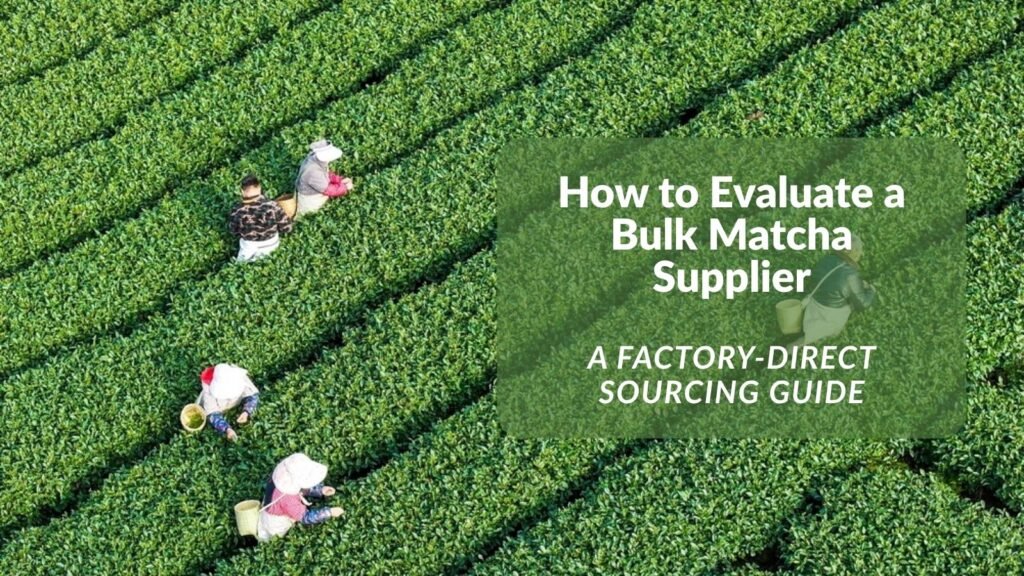
Tencha rows under shade for 20+ days before harvest in Yongsheng's Mengding gardens. Shading raises theanine and holds the green color.
| Marketing phrase | What to demand instead |
|---|---|
| "Ceremonial grade" | A written spec sheet per product: mesh / D50, CIE L*a*b*, shading days, cultivar |
| "Vivid jade green" | Measured L*a*b* values against your acceptance window and ΔE tolerance |
| "Ultra-fine, stone-milled quality" | Stated particle-size specification, milling method, and temperature control |
| "Premium Japanese standard" | Named origin, harvest window, and verifiable certifications |
How to Audit a COA: Avoiding "Fake" or Generic Test Reports
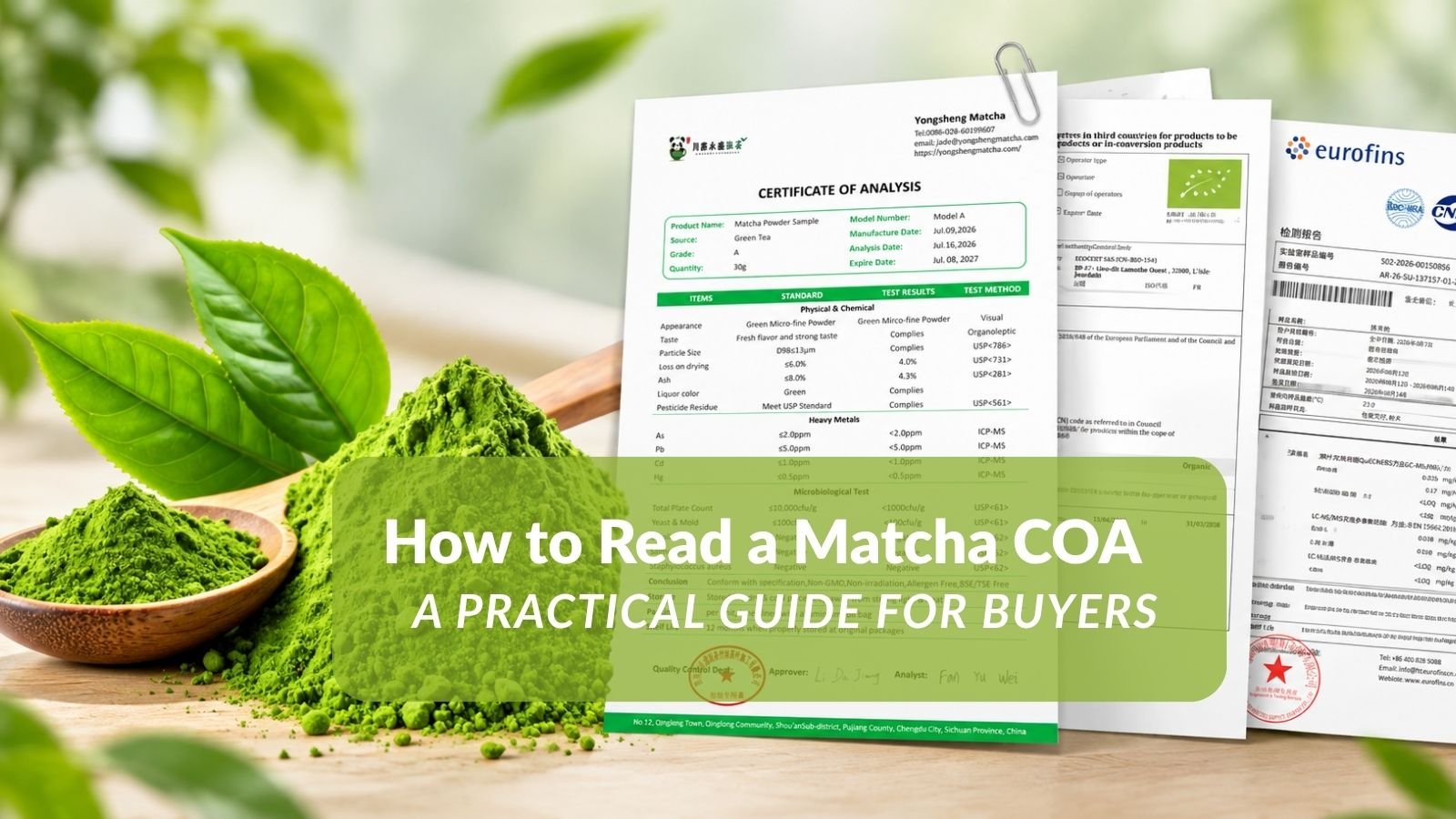
A certificate of analysis (COA) is a lab report for one specific batch, and that is the entire point of the document: a report that isn't tied to your batch, whether by a lot number or by a model name plus manufacture date standing in for one, proves nothing about the matcha you're buying. A generic or "representative" COA is background reading; only a batch-linked report counts as evidence. How to read the real thing (header fields and batch identifiers, specifications, results, units, test methods, ND, LOQ, and a seven-point red-flag checklist) is covered section by section in our companion guide: How to Read a Matcha COA.
What belongs on this page is the audit around the document. The COA, invoice, packing list, product labels, and bill of lading should agree end to end on product identity and lot numbers; mismatched paperwork is itself a border and traceability risk. Limits are set market by market: the EU, for example, applies a default pesticide MRL of 0.01 mg/kg where no specific limit exists, and Regulation (EU) 2023/915 sets no maximum level for lead or cadmium in ordinary tea. Verify the current limits for your destination market with your importer or compliance counsel. And before wiring a deposit, ask two questions: will the bulk be produced against the sample I approved (a retained reference sample), and can I commission pre-shipment third-party inspection?
Our practice, for comparison: every batch ships with its COA plus heavy-metals and pesticide-residue reports, a microbial test, an allergen statement and MSDS. They come from a facility that is SC-licensed (SC is China's food-production license), certified to FSSC 22000 (a global food-safety management system), and FDA-registered, holding EU, USDA and JAS organic certificates, with every lot traceable back to the field.
Supply Chain Stability: Cold Storage & Capacity as B2B Lifelines
The most common B2B matcha failure has nothing to do with safety documents: batch one is vivid, batch three arrives dull, bitter, and slightly khaki. Nothing on the COA changed. The powder degraded between milling and shipping, or the supplier quietly re-blended a different harvest to fill your container. Matcha is an agricultural product; keeping batches consistent takes infrastructure.
Cold storage: where your matcha waits
Heat, light, oxygen, and time fade chlorophyll and flatten aroma. The telling question is simple: where does finished powder sit between milling and your ship date, at what temperature, and for how long?
We mill to demand and hold sealed stock in a 20,000 m² cold warehouse at −18 °C, with nitrogen-flushed packaging to strip residual oxygen before each case is sealed. So don't just ask whether a supplier has "cold storage"; ask what temperature, for how long, and in what packaging.

Finished matcha held at −18 °C in nitrogen-flushed packaging between milling and shipping, so batch three ships as vivid as batch one.
Capacity: who covers your growth, and the season you forgot
Ask for numbers a trading company cannot produce: annual output, garden ownership, current utilization. Our answer: 150,000 mu of self-owned gardens on Mount Mengding feeding roughly 10,000 tonnes of annual matcha output. The spring harvest is secured at the source, milling runs year-round against orders, and one buyer's spike does not empty the silo.
Capacity plus cold stock is also what keeps supply steady through demand swings and holiday shutdowns: a factory plans around Chinese New Year; a reseller can only hope.
| # | Ask | A factory answer sounds like |
|---|---|---|
| 1 | Annual capacity and current utilization? | Stated tonnage with headroom, by season |
| 2 | Where, and at what temperature, is finished stock held? | Named cold-storage capacity and set temperature |
| 3 | Is the tencha own-grown or brokered? | Own gardens, named region and cultivars |
| 4 | How are peak season and Chinese New Year handled? | A production calendar and booking terms |
| 5 | How is batch-to-batch consistency enforced? | Spec sheet + retained reference sample + numeric tolerances |
Application-Specific Performance: What Cafés & Bakeries Really Need
A lot can pass every safety panel and still fail your menu. A COA tells you the powder passed its safety tests; it says nothing about whether the powder will perform in your drink or your dough. Never approve a bulk order on documents alone. Bench-test in your own setup, with your milk and your oven. Two protocols we hand to buyers:
For cafés and beverage chains: the 15-second shake test
Your baristas don't whisk. They shake or blend, usually into refrigerated dairy or oat milk. The test: 2 g of matcha into 200 ml of cold whole milk or oat milk, 15 seconds of shaking, then pour into a clear glass. Watch for undispersed clumps ("fish-eyes," in trade parlance), a sediment ring after ten minutes, and the color against your reference. Then hold a serving at 60 °C for 30 minutes and re-taste. Bitterness that blooms in the hold is how a drink recipe dies during the afternoon rush.
What to demand alongside the powder: per-serving dosing (grams per 12 oz) so cost per cup is a known number, and a product proven in cold dispersion. Our matcha for lattes line is specified for hot-and-cold dispersion with minimal sedimentation; one drinking product is rated to retain 80% of its fresh flavor after 30 minutes held hot. We calibrate dosage and cost per cup as part of formula development.
If you run bottled ready-to-drink lines, the failure modes change to shelf sedimentation and color loss through UHT (ultra-high temperature processing): request pH- and UHT-stability data for that specific application.
For bakeries and food manufacturers: the 180 °C bake test
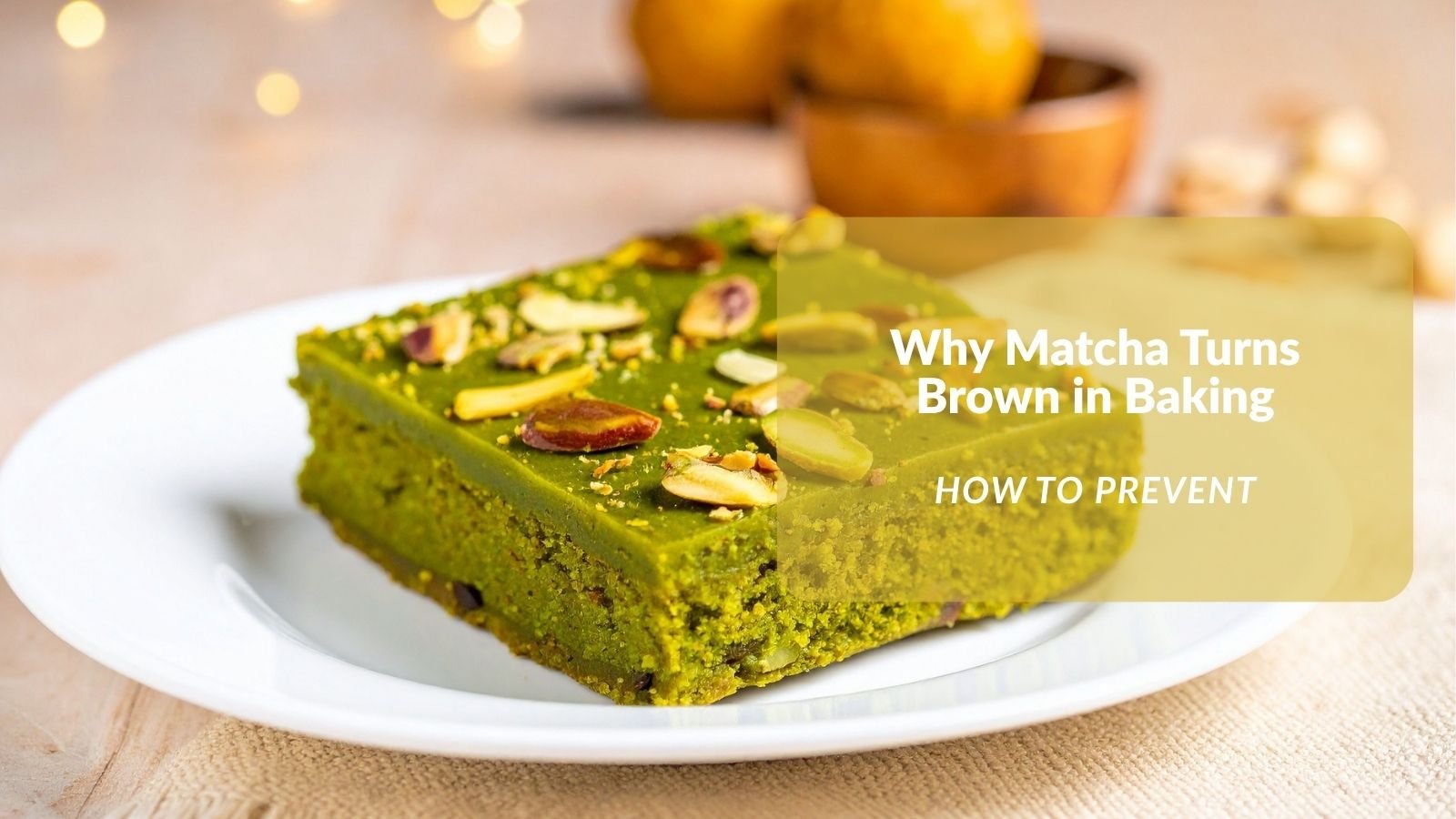
In the oven, matcha meets its enemies at once: sustained heat and alkaline leaveners attack the chlorophyll, green slides toward olive-brown, and the flavor changes with it. The test: bake a standard sponge or shortbread with a fixed percentage of matcha at 180 °C, then score green retention against the raw batter right after baking, after cooling, and on day two.
Display-case fade is a separate, real failure, so buy a product built for the oven: our culinary-grade matcha for baking is tested for high-temperature performance and color retention in baking. If a supplier offers one powder for every application, ask for the test data behind each one.
The sequence that protects you:
sample → bench-test in your setup → lock the spec sheet → order bulk against the approved reference sample
Frequently Asked Questions
How can I verify if a supplier is a real manufacturer or a trading company?
Ask for evidence a reseller cannot produce: a food-production license (in China, the SC license) in the factory's own name with the factory address, verifiable production-line ownership, and an audit, on site or by live video.
Our answer: we are the manufacturer. Yongsheng Matcha owns the full chain: 150,000 mu of tea gardens on Mount Mengding, a 53,000 m² facility with a Class 100,000 cleanroom and 20,000 m² of cold storage, plus our own export team. So you buy factory-direct with no middlemen. We also run guided factory tours for B2B buyers.
Can you send sample kits with lot-specific COAs before bulk ordering?
Yes. We ship free samples of 10 to 500 g drawn from production lots, each with the COA for that lot, so the document you evaluate is the document your container will carry.
Bulk is then produced to a written spec sheet and work instructions. Ask every supplier the same question; sample-stage COA discipline is a preview of what you will rely on at container scale.
What is the lead time for 100 kg+ bulk orders?
It depends on volume, mesh, packaging, and the shipping route. What you should ask for is a confirmed production and shipping schedule issued with your order, with peak-season and holiday windows agreed up front.
Tell us your destination and volume and we will return a schedule for your launch. Capacity and packaging detail is on our bulk matcha supply page.
How is matcha different from green tea powder?
Matcha comes from tencha, leaf shaded before harvest (typically around 20 days or more) and processed specifically for matcha. Green tea powder is ground from unshaded leaf. The difference shows up in the cup: less theanine and umami, duller color, sharper bitterness. Don't take the label's adjectives for it; check the spec sheet (shading, cultivar, origin, processing) and taste it yourself.
Do you support small first orders, or only full containers?
Our lines run from small-batch to bulk. You can start at pilot scale and scale to containers as your menu proves out, including custom mesh, custom blends, and private-label packaging as you grow.
Evaluate us with this article.
The four checks above are the standard we expect to be judged by, so run them on us first. Request a sample kit with lot-specific COAs and the spec sheets for your application, and bench-test us against your current supplier, in your own milk and your own oven.