
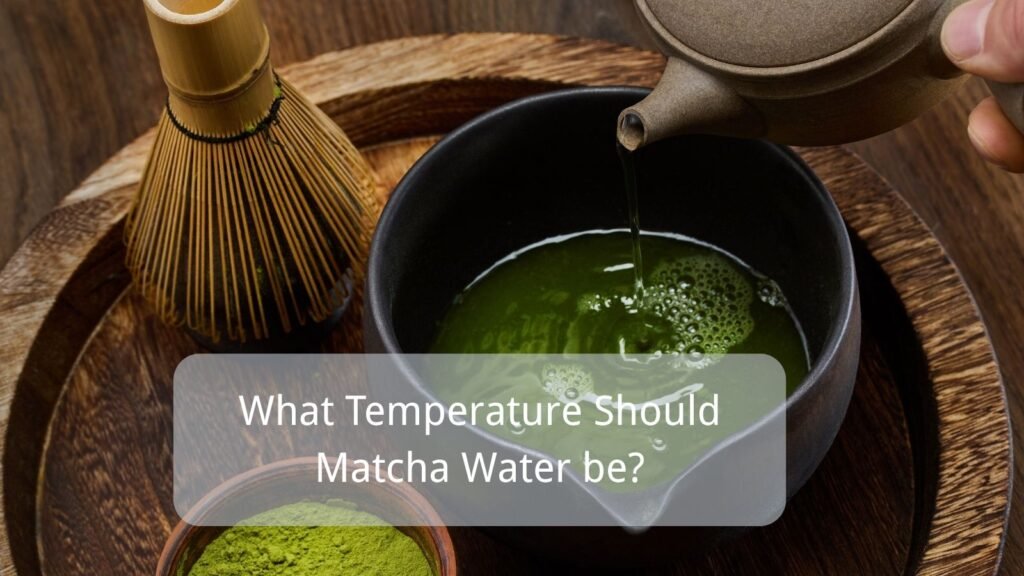
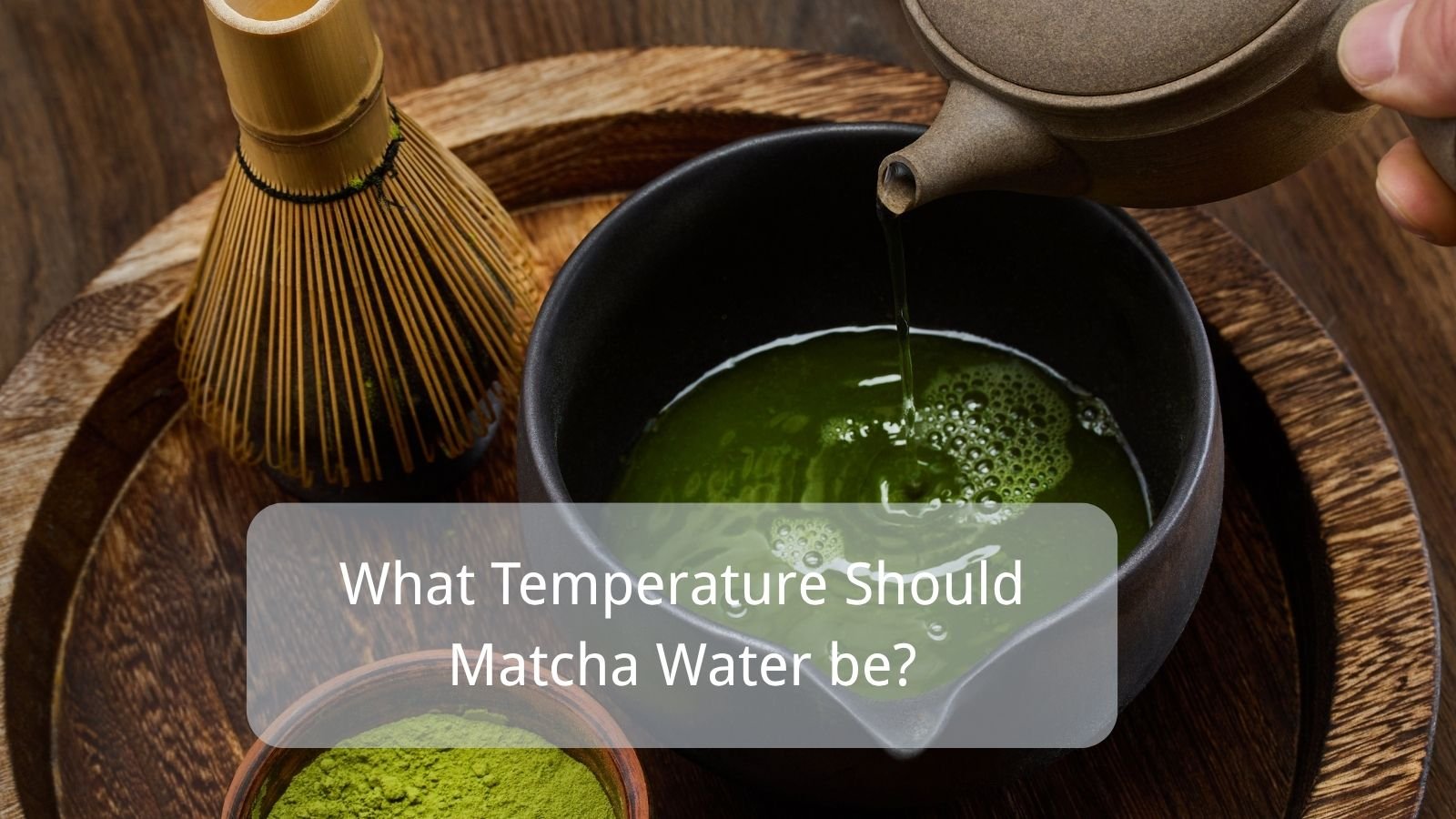
For a typical bowl of usucha (thin matcha), 80°C (176°F) is a good place to start. If you want a softer cup, try 70 to 75°C (158 to 167°F). For a stronger, brisker profile, go a little warmer. A practical starting range is 70 to 85°C (158 to 185°F), although your preferred temperature will depend on the matcha, preparation ratio, and personal taste.
Why does water temperature matter?
Temperature affects more than how hot the drink feels. It also changes the balance of compounds released into the cup. A 2025 study on Longjing leaf tea found that lower brewing temperatures increased umami and reduced bitterness and astringency, while hotter water accelerated the extraction of some flavor compounds.
The study looked at Longjing leaves, not matcha, so it does not give us a temperature ranking for matcha. Matcha is whisked as a powder rather than steeped and strained.
With matcha, cooler water often gives a softer cup, while hotter water can bring out more bitterness and astringency. These are tendencies, not guarantees, so keep the matcha and recipe the same when comparing temperatures.
What we observed at different temperatures
We tested our Mt. Mengding of Essence matcha at 60, 70, and 90°C. Each bowl used the same recipe: 2 g of matcha, 60 mL of water, and a 70-prong whisk.
| Water temperature | Foam in our test | Flavor in our test |
|---|---|---|
| 60°C (140°F) | Almost no fine foam | Clean, with low astringency and acidity |
| 70°C (158°F) | Rich, stable foam | The most prominent umami and our preferred balance of flavor and texture |
| 90°C (194°F) | The best foam of the three | More bitter, acidic, and astringent |
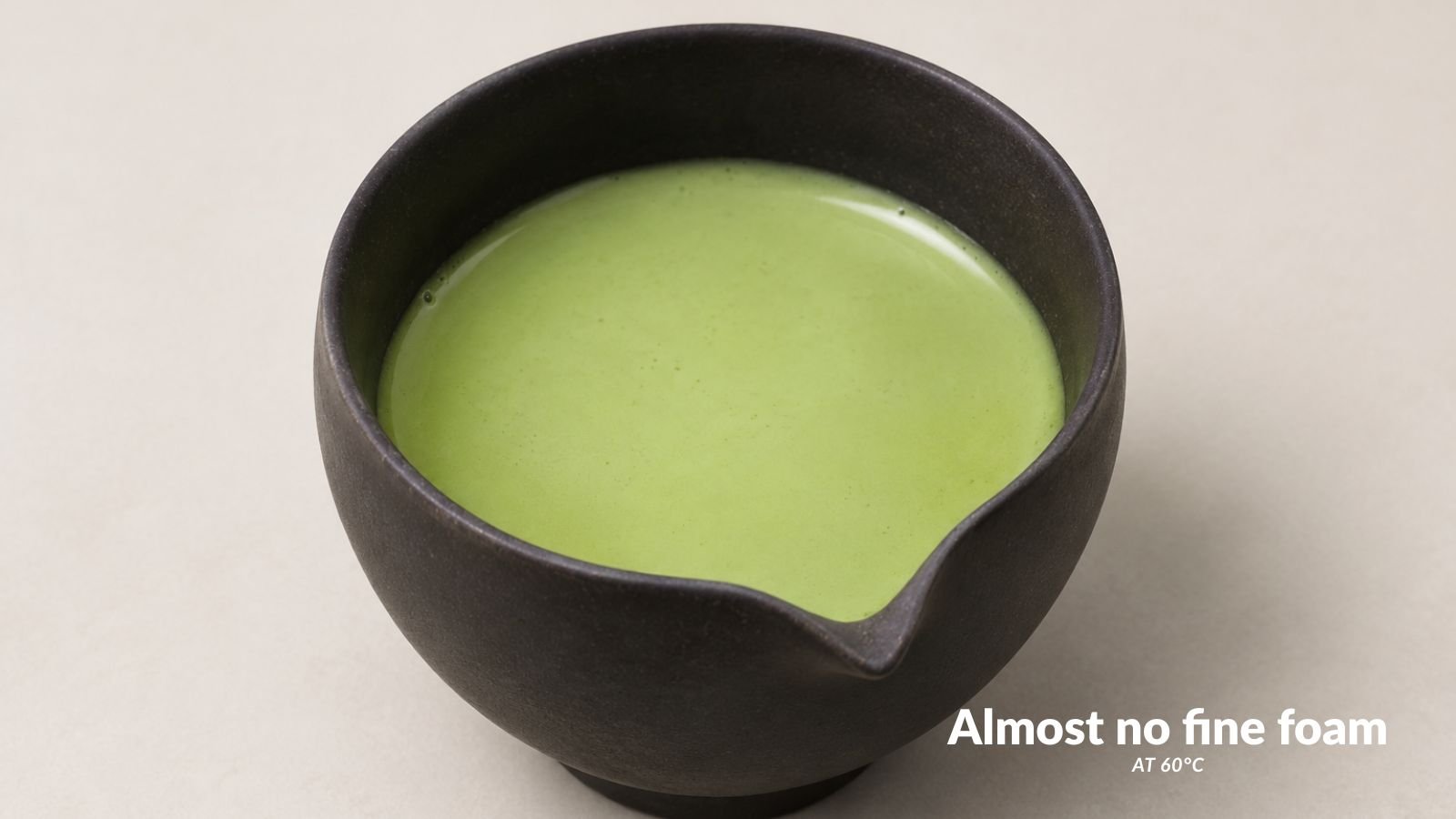
The 60°C bowl tasted clean, but we could barely get a fine foam.
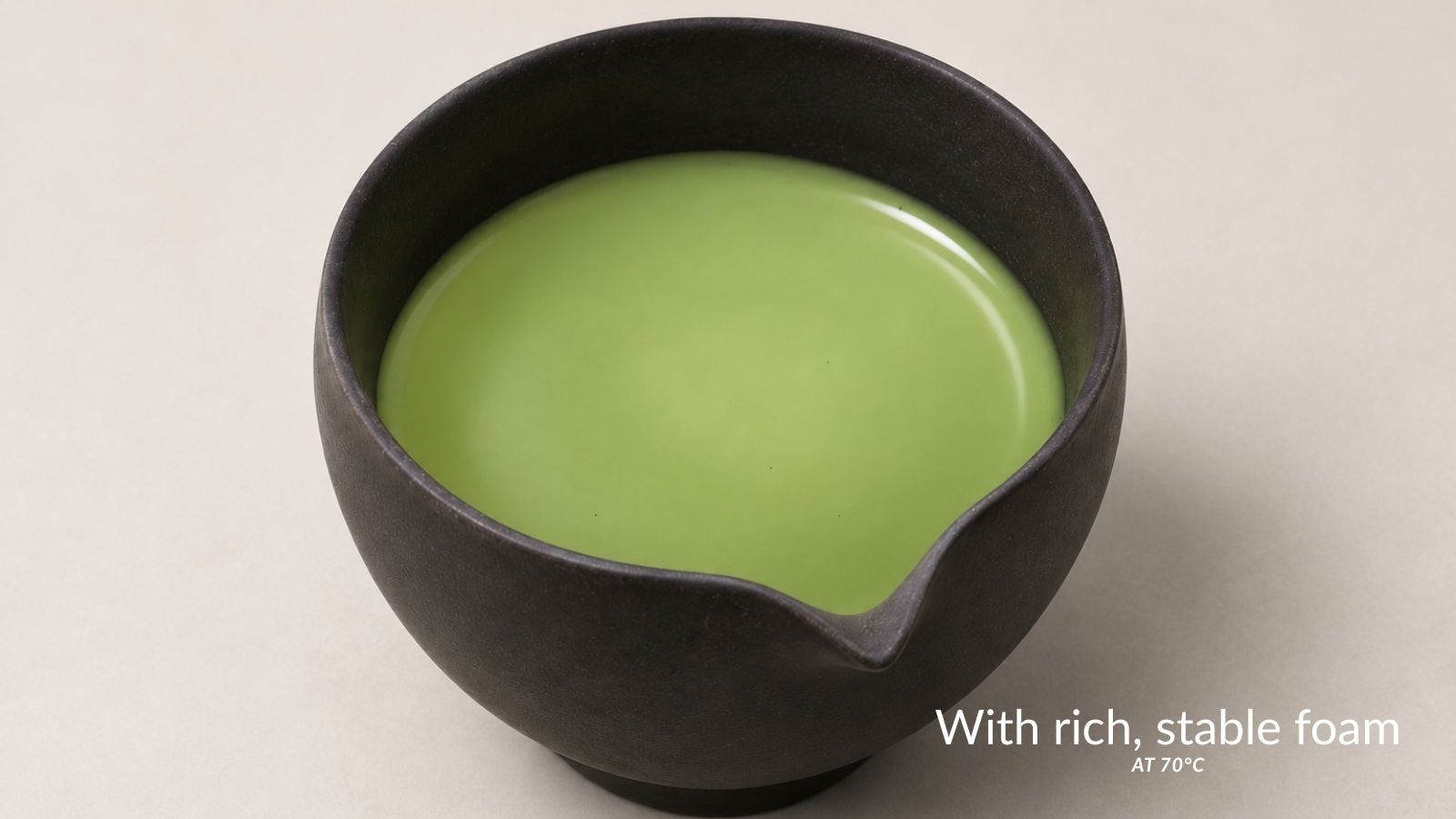
The 70°C bowl had rich, stable foam and the most noticeable umami.
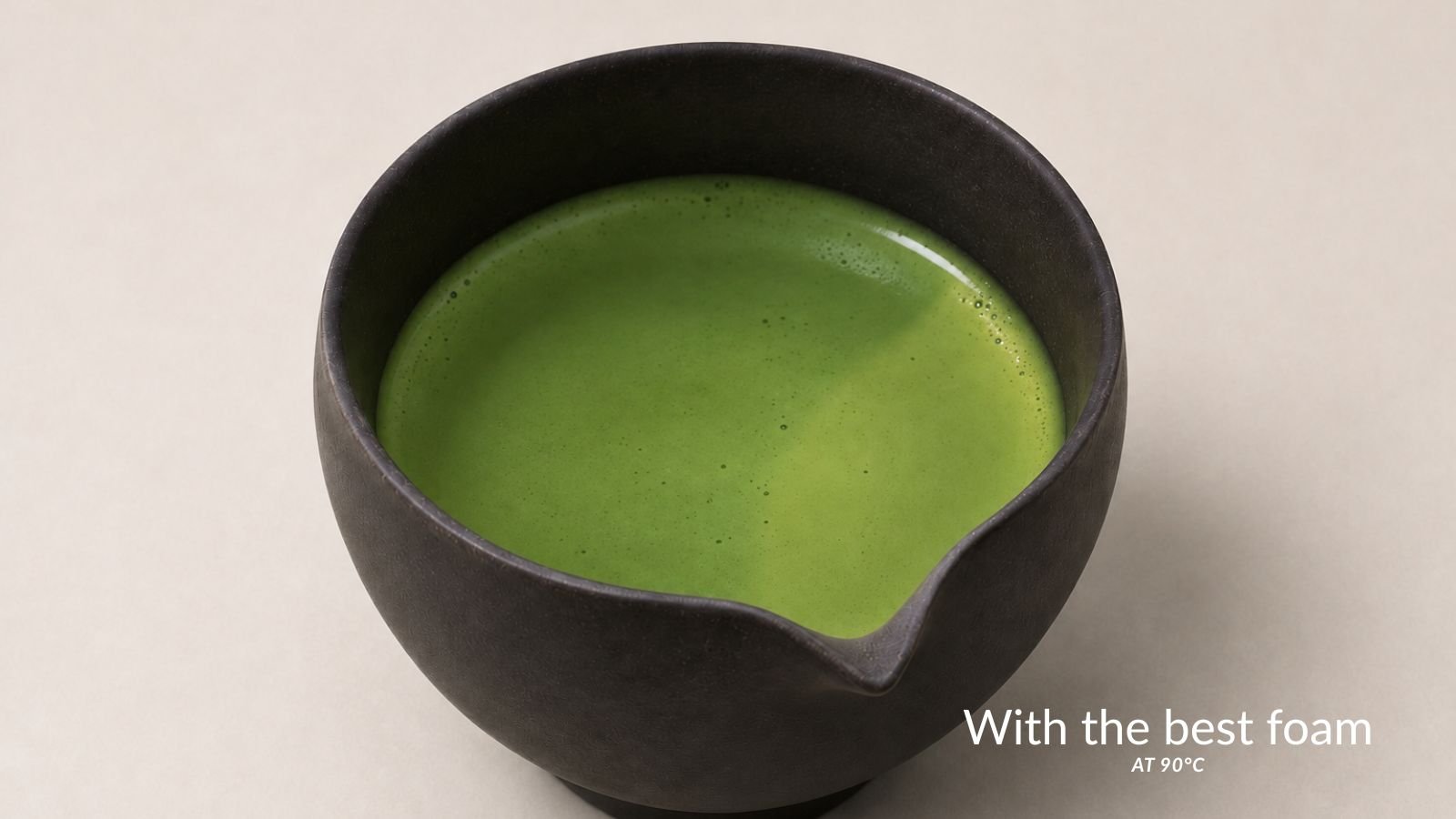
The 90°C bowl had the best foam, but we tasted more bitterness, acidity, and astringency.
Of these three, we preferred 70°C for its balance of flavor and foam. That was with this matcha and our 2 g-to-60 mL recipe, so we would not call it the best temperature for every bowl. If you are trying a different matcha, 80°C is still a good place to start.
How can you cool boiling water without a temperature-controlled kettle?
You don't need a temperature-controlled kettle. Boil the water, pour the amount you need into a measuring cup or another clean, heatproof vessel, and let it cool. A thermometer is the easiest way to check the temperature. Once you know how long your usual setup takes to reach 80°C (176°F), you can use that time as a guide next time.
Without a thermometer, try the pour-and-cool method. A traditional cooling vessel called a yuzamashi is made for this, but another clean vessel works too. Japanese tea guidance from the Ministry of Agriculture, Forestry and Fisheries gives a rough estimate of 5 to 10°C (9 to 18°F) per transfer. Don't treat that as a guarantee. The vessel, water volume, and room temperature all affect the result, so keep your setup consistent and adjust by taste.
FAQ
Can you use boiling water for matcha?
You can, but we would not use it as the default. Boiling water will not automatically ruin matcha, but it can make the tea taste sharper and more bitter or astringent. Start with 80°C (176°F) and try cooler water if the result tastes too harsh. If you want to experiment with hotter water, change only the temperature and keep the matcha and recipe the same.
Is 80°C too hot for matcha?
No. 80°C (176°F) is a common starting point, not an excessive temperature or a fixed standard. If your matcha tastes too bitter or astringent, try 70 to 75°C (158 to 167°F). If it tastes muted, try slightly warmer water.
Why does my matcha taste bitter?
Check the simple things first: your matcha-to-water ratio, whether you sifted the powder, and how evenly you whisked it. Clumps and poor dispersion can affect both texture and flavor. Then keep everything else the same and compare 80°C (176°F) with 70°C (158°F). If the cooler cup still tastes too bitter, check the matcha's freshness and your water. It may also simply be the flavor of that particular tea. Change one variable at a time.
Can you make matcha with cold water?
Yes. Sift or disperse the matcha well, then shake or whisk it thoroughly with cold or room-temperature water. The flavor and texture will be different from hot-whisked matcha. The powder can settle over time, so shake or stir it again before drinking. If you are using a sealed bottle, stick to cold or room-temperature water. Never add hot water to a sealed bottle.
Does matcha latte need the same water temperature?
For a latte, use the same 80°C (176°F) starting point for the matcha base. Whisk the matcha with water first, then add milk or soy milk. Milk changes the flavor of the drink, so adjust to taste. Your preferred temperature for plain matcha may not be the one you like best in a latte. For help choosing a matcha that keeps its flavor in milk, see our guide to the best matcha for lattes.
Bottom line
Start with 80°C (176°F) and adjust to suit the matcha. Try 70 to 75°C (158 to 167°F) for a softer cup, or go slightly warmer if the tea tastes muted. In our test with Mt. Mengding of Essence matcha, 70°C gave the best balance of umami and foam. With another matcha or recipe, compare two temperatures side by side and see which one you prefer.

 English
 Spanish
 German
 Arabic
 Vietnamese
 Russian
 Portuguese