
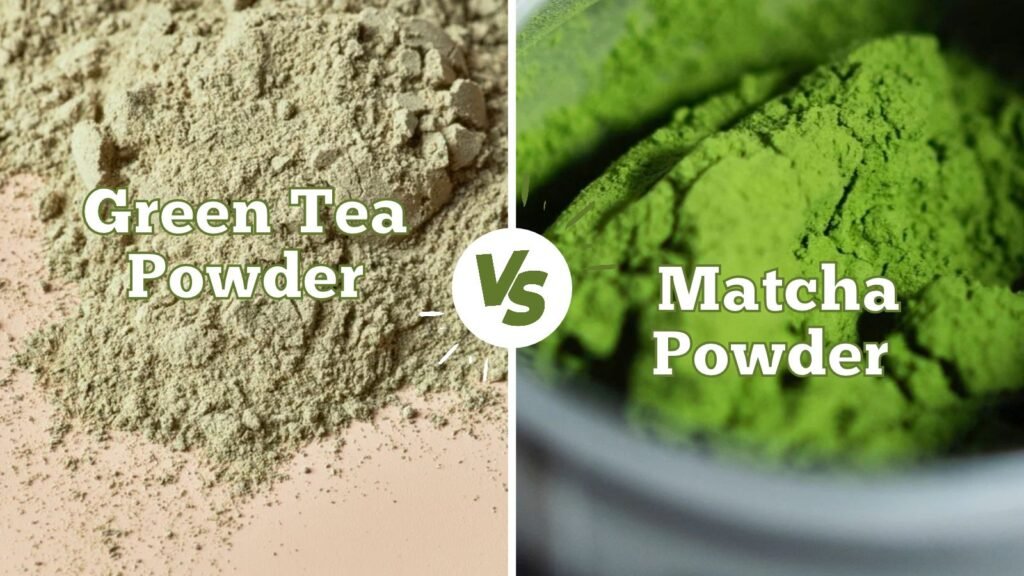
Matcha powder and green tea powder are often sold side by side, sometimes at very different prices. They are related, but they are not necessarily the same product. Matcha is a specific type of powdered green tea made from shade-grown leaves that are processed for grinding. "Green tea powder" is a much broader label that can cover ground leaf, instant extract or even a sweetened blend.
The main differences lie in the raw materials, processing methods, and intended applications. Understanding these differences can help buyers choose the right powder for their products.
What Is the Difference Between Matcha and Green Tea Powder?
Matcha powder is defined by how it is made. Japan's trade promotion agency JETRO describes matcha as powder made from tencha: tea leaves grown under shade, steamed and dried without rolling, then de-stemmed, de-veined and ground. It also notes that powdered tea made from leaves other than tencha is classed as "powdered tea" rather than matcha, and that grinding with a machine instead of a stone mill can still produce matcha. The international technical report ISO/TR 21380:2022 likewise defines matcha by plant source, cultivation and production method, and explicitly excludes flavored matcha, blended matcha and soluble extracts. Because tencha is produced specifically for grinding, matcha is not simply "green tea that has been pulverized."
Green tea powder is a broader, less precise term that can cover several different products. Ground green tea powder is regular green tea (such as sencha), typically grown in open sunlight and rolled, then crushed into powder. Instant green tea powder is green tea brewed into a concentrated extract, then spray-dried or freeze-dried (see ISO 6079 for the international specification for instant tea in solid form); it dissolves completely, and some versions add a carrier such as maltodextrin. Blends and latte mixes combine tea powder with sugar, milk powder or other ingredients, where tea may be only part of the formula.
| Traditional Matcha | Ground Green Tea Powder | Instant Green Tea Powder | |
|---|---|---|---|
| Raw materials | Shade-grown tencha leaf (leaf only, stems and veins removed) | Open-grown green tea leaf, often including stems and veins | Water-soluble tea extract, sometimes with a carrier |
| Processing | Shade → steam → dry flat (no rolling) → de-stem → fine milling | Steam or pan-fire → roll → crush | Hot-water extraction → concentrate → spray- or freeze-dry |
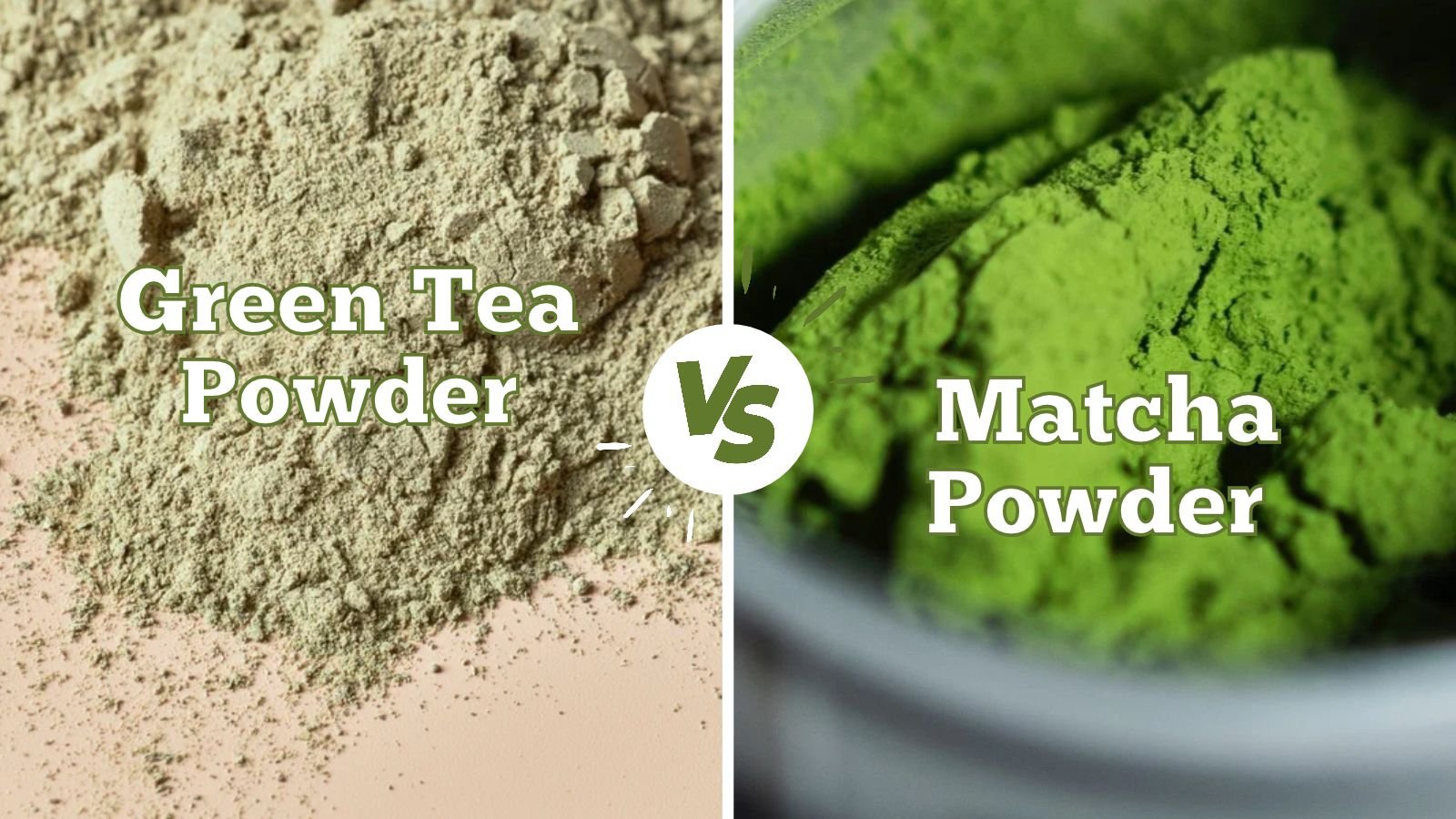
| Typical appearance | Typically bright green; very fine texture | Yellow-green to olive, coarser | Commonly tan to beige; soluble extract-based |
| Flavor profile | Umami-forward, balanced bitterness, nori-like aroma | Fresh but more bitter and astringent | Light aroma, sometimes a "cooked" note |
| Common applications | Traditional tea, lattes, desserts, premium products | Flavoring, foods where color is less critical, some blends | Instant drinks, RTD bases, powdered mixes |
These are typical differences, not fixed rules. Individual products vary by cultivar, grade and supplier.
Key Differences in Color, Taste, and Processing
Most visible differences trace back to what happens before and during processing.
Cultivation and processing. Tencha is shaded for roughly two to four weeks before harvest. A 2022 study in the International Journal of Molecular Sciences (Chen et al.) found that shaded tea plants accumulated more chlorophyll and theanine, an amino acid that contributes to umami, and less of certain polyphenols, which contribute to bitterness and astringency. After steaming, the leaves are dried flat, stems and veins are removed, and only leaf material is milled. Ground green tea powder usually skips shading and de-stemming, so more of the whole leaf ends up in the powder. Instant powder goes through hot-water extraction and drying, which strips away much of the leaf's color and volatile aroma.
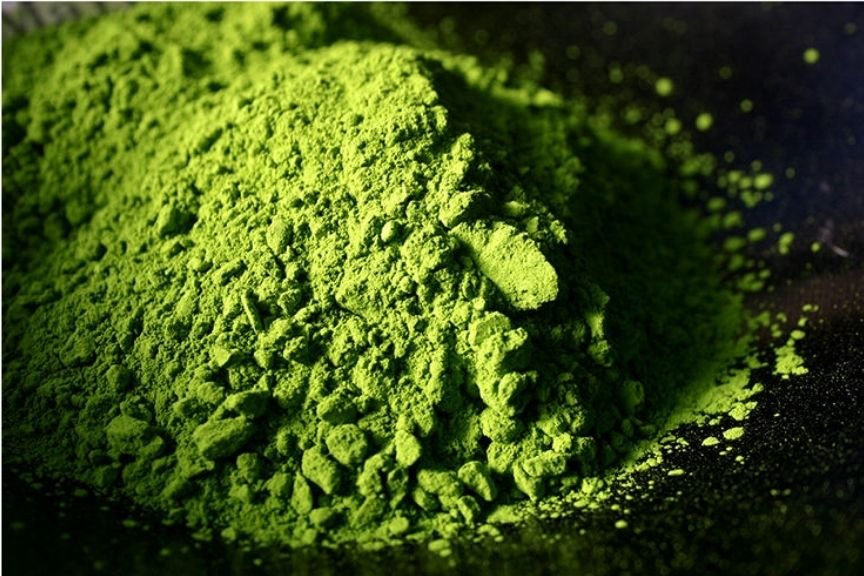
Appearance and taste make the differences obvious. Matcha is often bright green, with a fine texture and a savory, umami-rich flavor. Ground green tea powder may appear more yellow-green or olive and can taste more bitter or astringent. Instant green tea powder varies in color and aroma depending on the extract and formulation used.
Color alone is not a reliable test. A vivid green does not guarantee that a powder is authentic matcha, and it does not by itself indicate overall quality. Color is influenced by cultivar, harvest timing, fineness, storage conditions, and in some cases added colorants. The greenest sample is also not always the best fit for your product. A more dependable approach is to check the ingredient list, the specifications and how the powder performs in your actual application.
Which Powder Is Better for Your Application?
No powder is universally better. The right choice depends on your flavor target, color requirements, dispersibility, formulation and cost.
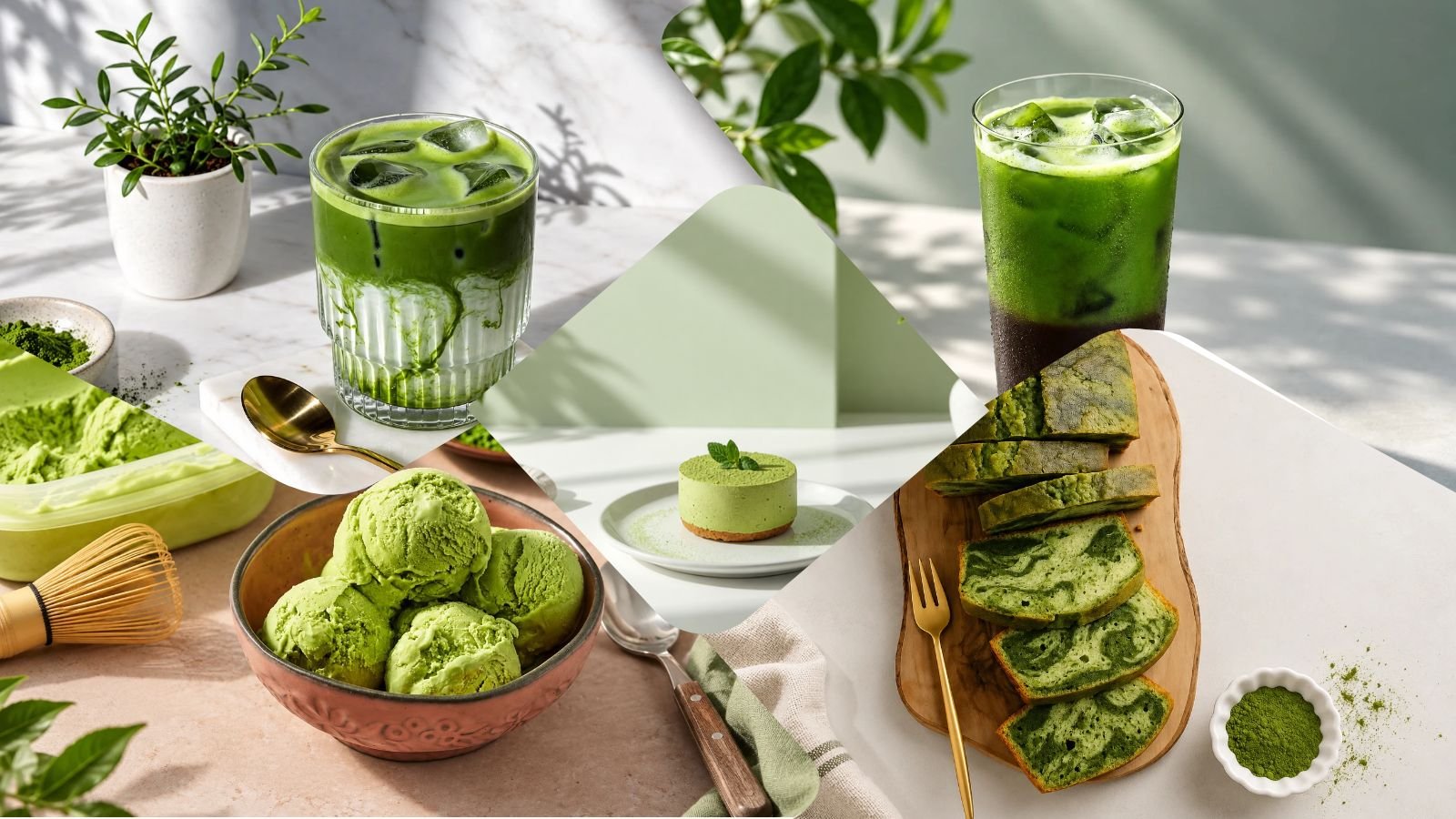
- Traditional tea preparation. Matcha is commonly used for whisked tea, where texture, flavor, and foam formation matter. Coarser ground powders may produce a less smooth texture, while instant powders are generally designed for convenient dissolution rather than traditional whisking.
- Matcha lattes and beverages. Color, tea flavor, and compatibility with milk or other ingredients matter here. Matcha, ground green tea powder, and instant tea ingredients can perform differently depending on their specifications and formulation. Many cafés choose a matcha selected for latte performance.
- Baking and desserts. Heat can turn chlorophyll olive-brown, so baked goods usually lose some color. Chilled or frozen desserts such as mousse and ice cream show color and flavor best. For high-temperature baking, a culinary-oriented matcha is often a practical balance of cost and performance.
- Commercial food and beverage manufacturing. Consider dispersion, sedimentation, batch consistency, processing requirements, and cost per kilogram. The right choice depends on the finished product and its formulation. Instant powders suit fully soluble products, while matcha suits products where color and tea character are central, though ready-to-drink formats may need stabilizers and a "shake well" instruction.
How to Choose the Right Powder for Your Business
Whatever you are making, three practical steps keep sourcing straightforward:
- Confirm exactly what the product is. Ask whether it is shade-grown tencha milled into matcha, ground green tea, an instant extract or a blend, and check the ingredient list. Terms like "ceremonial" and "culinary" are market descriptions rather than official grades, so ask what is behind them.
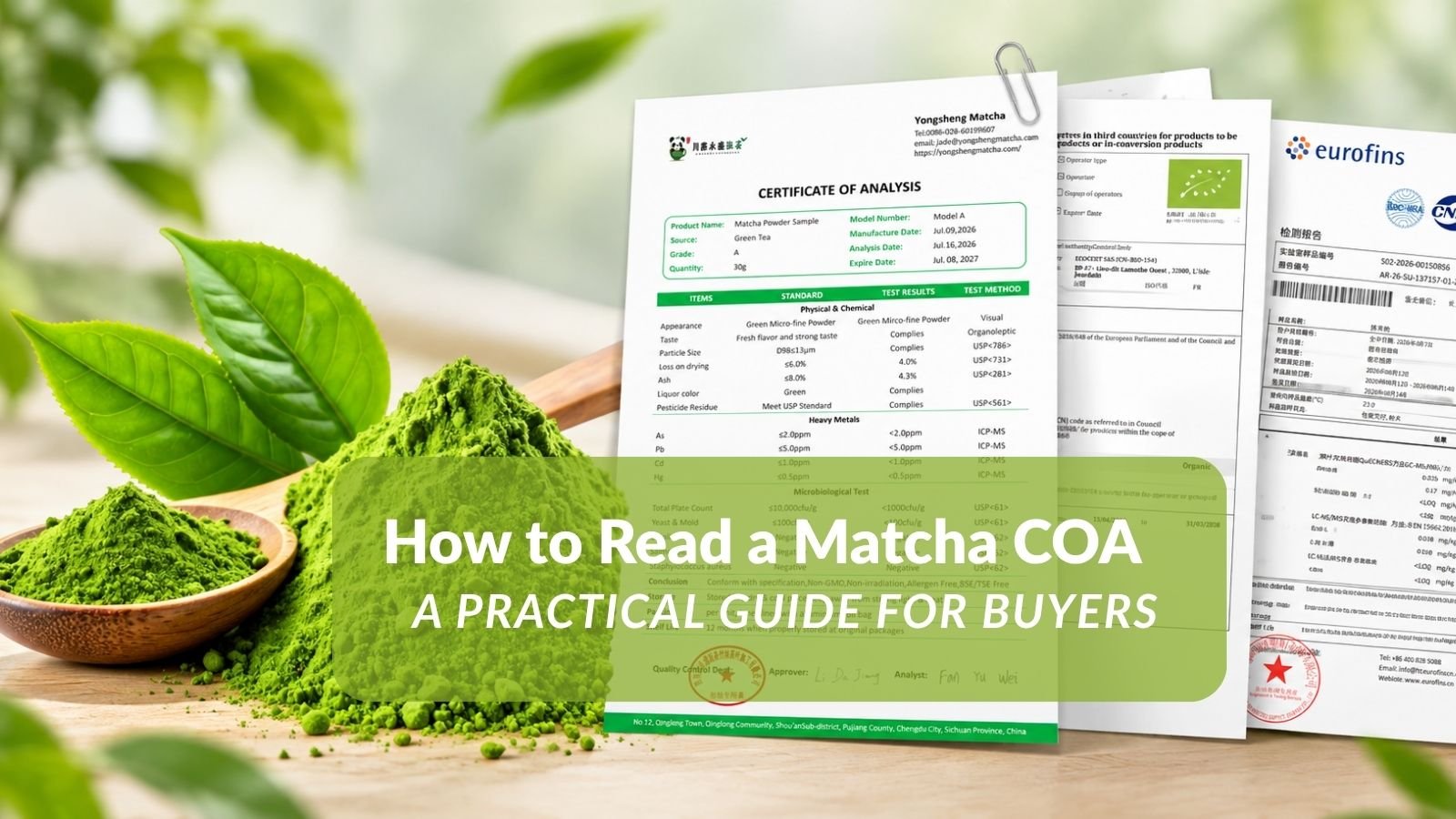
- Review specifications and documentation. Typical items include particle size, color, moisture, origin, a certificate of analysis (COA) and any test reports your market requires.
- Test samples in your real application. Use your actual milk, sweetener, baking temperature or beverage process. A sample that looks excellent in water may behave very differently in your formulation.
At Yongsheng Matcha, we start from the application. We match sample sets and spec sheets to what you are making, so you can compare options in your own recipe before committing to volume. You can request samples to start testing.
Perguntas Frequentes
Can green tea powder be used instead of matcha powder?
Sometimes, but not as a like-for-like swap. Ground green tea powder is typically coarser and less vivid in color, and instant powder will not froth or give the same green. Test in your recipe before substituting.
Can matcha powder and green tea powder dissolve in water in the same way?
No. Matcha and ground green tea powder form suspensions: fine particles disperse in water and gradually settle. A light, fine sediment is normal for matcha. Instant green tea powder dissolves completely because it is made from an extract.
Which powder is better for lattes, baking, or commercial beverages?
It depends on the requirement. Lattes depend on color and tea strength in milk, baking on how color and flavor hold up under heat, and commercial beverages on dispersion, stability and cost. Sample testing gives the clearest answer.
Is green tea powder always lower in quality than matcha?
No. They are different products made for different purposes. A well-made green tea powder can be the right choice for the right application, and quality ultimately means how well a powder meets its specification.
Conclusion
Matcha powder and other green tea powders can serve different purposes depending on their raw materials, processing methods, and application requirements. Before choosing a product for your business, consider your desired flavor, color, formulation, and budget.
If you are sourcing matcha for your brand, beverage business, or wholesale needs, contact Yongsheng Matcha to discuss your requirements and available product options.


 English
 Spanish
 German
 Arabic
 Vietnamese
 Russian
 Portuguese